“He did not look like a monster.”
As everyone now knows, Josh Powell incinerated himself and his two sons in response to an impending Court-ordered pychosexual evaluation and polygraph examination.
Elizabeth Griffin-Hall, the social worker overseeing his supervised visits, brought Charlie (7) and Braden (5) to their father for a scheduled visit on Sunday. When the guileless children ran inside, Josh Powell slammed the door in Griffin-Hall’s face, and attacked his boys with a hatchet and lit the ten gallons of gasoline he had splashed around the rental home he had established for the purpose of presenting a satisfactory facade for the Court.
“How this happened is that Josh Powell was really, really evil. I couldn’t have stopped him,” Griffin-Hall said.
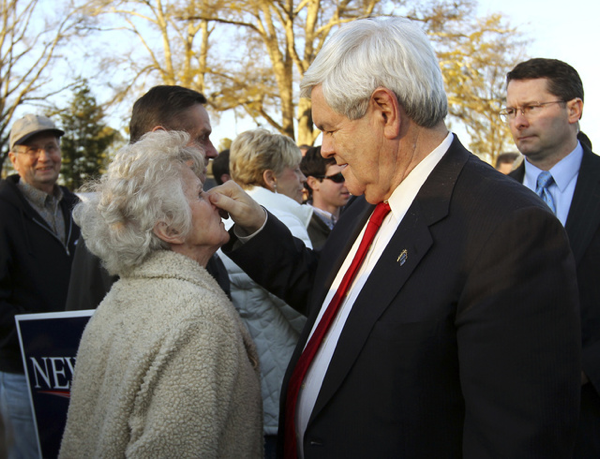
“I did everything I was supposed to do. I did everything right and the boys are still dead,” she said. “It took just a second. When I close my eyes I see him and he was so normal. He did not look like a monster.”
He did not look like a monster. We’ve heard that over and over again. Ted Bundy did not look like a monster. John Wayne Gacy did not look like a monster.
I disagree. This is exactly what a monster looks like, which is why it is so difficult to find them before they destroy innocent lives. They hide in plain sight.
Update 2/17/2012: Josh Powell had hundreds of images of disturbing cartoon sex and graphic depictions of incest on his home computer, something Utah authorities investigating his wife’s disappearance kept private for about two years.
Lack of Lending to Creditworthy Borrowers Restricting Housing
“Fed Chairman Ben Bernanke, speaking Friday at the International Builders Show in Orlando, Fla., said the wave of creditworthy households that are finding it difficult to obtain mortgage credit or to refinance is resulting in actions taken by the Federal Reserve – such as lowering interest rates to record lows – is helping to prevent a boost to the housing industry.
Fewer than half of lenders are offering mortgages to borrowers with a FICO score of less than 620 and a down payment of 10%, even though such loans are within the government-sponsored enterprises’ purchase parameters.”
Full article here.
54

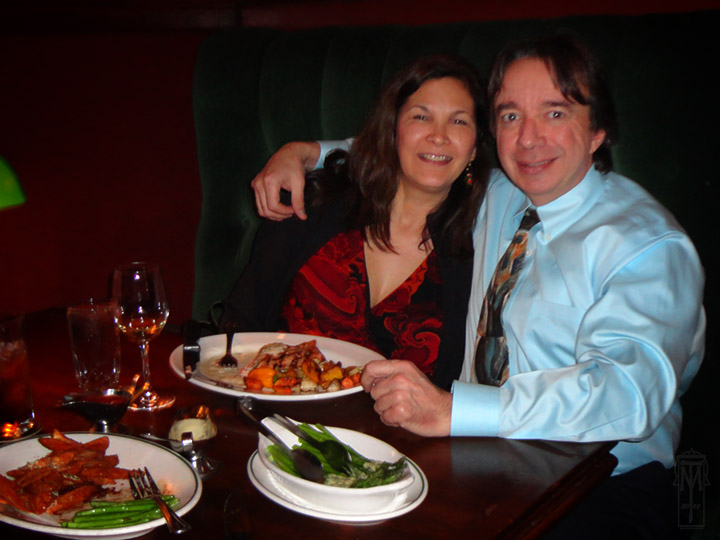
Camille treated me to a birthday dinner at the Metropolitan Grill in Seattle! Amazing Filet Mignon with Bearnaise sauce, asparagus and (true to my roots) steak fries! The Metropolitan gifted me with a crème brûlée (lit with a candle) to mark the occasion!
A 31-Year Project
758 Banks at Risk of Failing
After conducting stress and sustainability tests on hundreds of U.S. banks, Invictus Consulting Group found 758 American banks are at risk of failing.
The research and analysis firm said without corrective action or plans to merge and raise capital, it’s unlikely these 758 banks insured by the Federal Insurance Deposit Corp. will remain solvent over the long-term. In fact, failures could begin occurring within the next two years.
Florida is the most exposed with 72 banks at risk, followed by Illinois (69), Georgia (66), Minnesota (37), Missouri (33) and Tennessee (31). The states with no extremely at-risk banks are Alaska, Hawaii, New Hampshire and South Dakota.
Full article here.
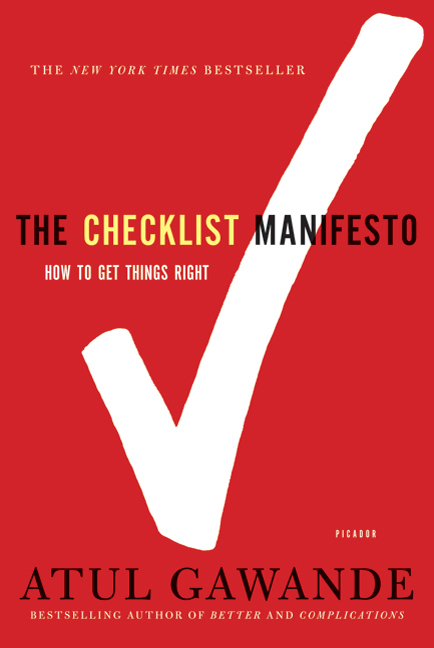
Book Review: The Checklist Manifesto
It’s not your imagination. It’s not because you are getting old.
There is a reason you, and everyone around you are making more mistakes than seem reasonable. The intellectual content of our world and professional lives are complex, and continue to become increasingly so.
More extensive training and more advanced technology has had little effect on the cumulative error rate, and medical mishaps (for example) continue to leave millions dead or severely injured throughout the world.
Things that were once done by a single person (such as “Master Builders” in previous centuries) can no longer be held in the memory of one person, and require the coordinated efforts of many to successfully complete goals.
Atul Gawande is a surgeon who has made a study of the pursuit of excellence, and in this book, he presents compelling evidence that a remedy for error reduction is available in the humblest and simplest of techniques: the checklist. Checklists have enabled pilots to fly aircraft of mind-boggling sophistication, and in the immensely complex world of surgery, a simple ninety-second application has cut the fatality rate by more than a third. “An intellectual adventure in which lives are lost and saved and one simple idea makes a tremendous difference, The Checklist Manifesto is essential reading for anyone working to get things right.” (Malcolm Gladwell)
Gawande begins by making a distinction between errors of ignorance (mistakes we make because we don’t know enough), and errors of ineptitude (mistakes we made because we don’t make proper use of what we know). Failure in the modern world is usually about the second of these errors, and Gawande presents dozens of examples from the worlds of medicine, building, finance and aviation, showing how routine tasks have now become so incredibly complicated that mistakes of one kind or another are virtually inevitable. The supporting anecdotes make this an easy, captivating read, including stories about Walmart’s response to Hurricane Katrina, and the real reason why Van Halen demanded that there be a bowl of M&M’s with all the brown ones removed in their backstage dressing room.
I had a tough time putting this down, especially as it dovetails so beautifully with my recent training in Six Sigma.
The Checklist Manifesto
Atul Gawande
Metropolitan Books (December 22, 2009), 224 pages
ISBN-10: 0805091742
ISBN-13: 978-0805091748
Ghosts
Truth-O-Meter
I love these icons from PolitiFact.com, especially the “Pants on Fire” for the biggest lies told by politicians:
I’m curious to see what the fact checkers have to say about the Stat of the Union address.
Wish List
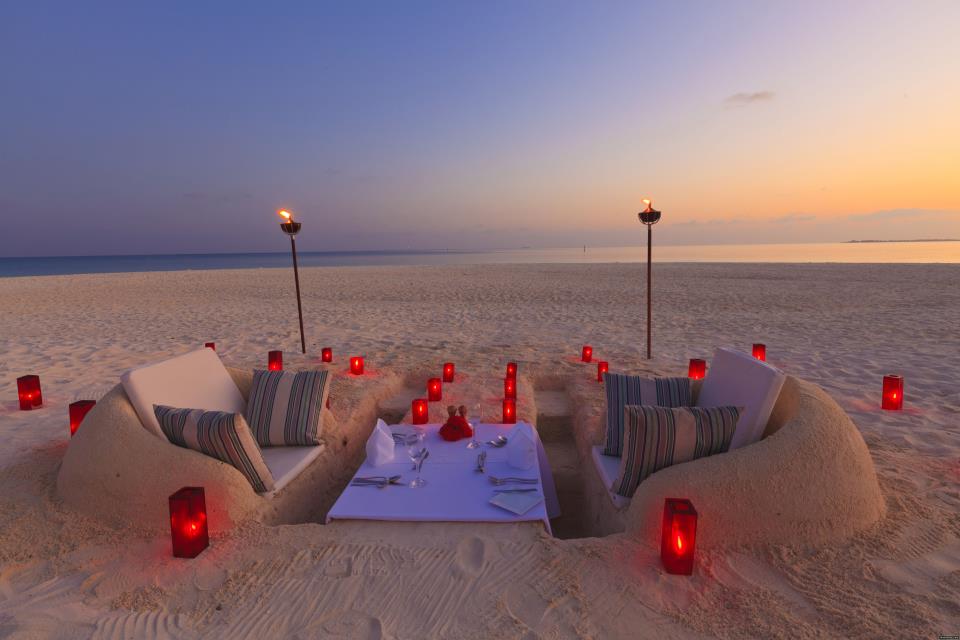
After the past week of crap weather, this would be a great place to be. Image source
How to Vote
Meow
The Great Meltdown
The temperature has risen into the forties, so the snowfall has changed to rain, which is expected to continue all week. The side streets are covered with three inches of hardpacked ice, slush on top, with water trapped and pooling. In other words, it’s still tough to get around, and pretty soon a lot of Western Washington will be under water in more ways than one.
Snowmageddon has been an interesting ride. A baby was born on an elevator stuck between floors Wednesday at St. Joseph Medical Center in Tacoma (Blake Thacker entered the world early at 7 pounds, 15 ounces, just short of the 14th floor). 31 inches of snow fell in 24 hours, 90 inches total on Mount Hood, which was great news for skiers. And an avalanche swept a car across the I-90 at the pass, which was hastily closed. Again. Ice closed all three Sea-Tac Airport runways, and the State Patrol responded to more than 2,700 accidents (roughly quadruple the average number); while buildings, roofs and carports collapsed under the snowload. Approximately 300,000 people had no power yesterday, and most will have none for at least a week.
The Governor declared a state of emergency after an ice storm landed on top of heavy snow, and sidewalks in downtown areas are taped off because chunks of snow and ice are falling onto the sidewalks far below.
From Captain Skedaddle
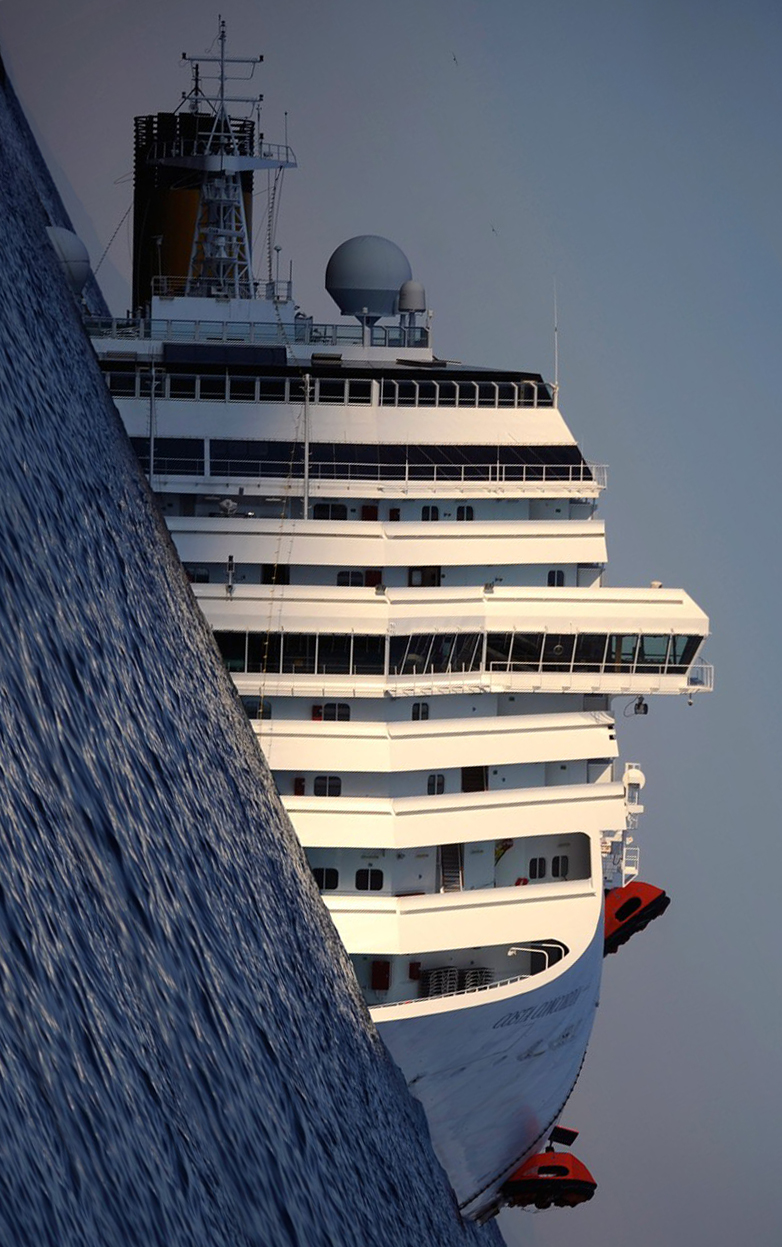
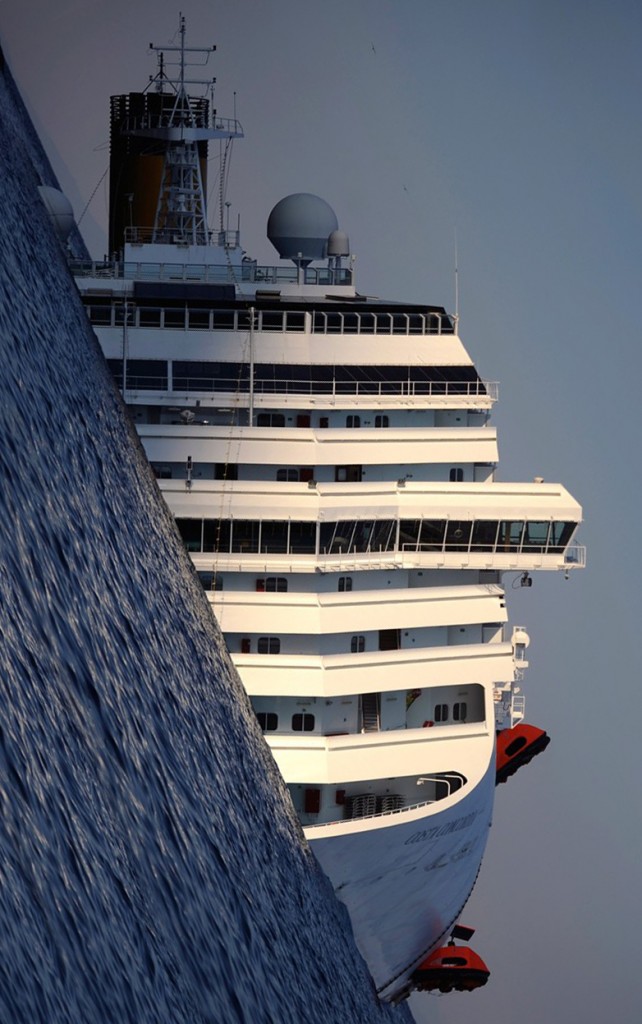
For anyone interested, these two links [1] [2] from The Atlantic have some pretty good pix from the Costa Concordia wreck.
Additionally, here is a blog post about the possible methods that might allow the salvage of the Costa Concordia.
“Captain Skedaddle” is, of course, my reference to the alacrity with which Captain Francesco Schettino abandoned his charges and duties in what appears to be a modern benchmark for maritime cowardice.
Over the coming months, the buck will be passed so many times it will wear out in front of you. Analysis of Lloyd’s List Intelligence tracking data shows that Costa Concordia sailed within 230 m (755 feet) of the coast of Giglio Island on a previous voyage, slightly closer to the shore than where it subsequently hit rocks last Friday. But predictably, Costa Cruises (a subsidiary of Carnival Corporation & Plc.) insists Captain Schettino’s deviation from route was unauthorized. Costa Cruises needs to blame it on the Captain to limit their liability and losses, and Schettino needs to blame it on bad navigational data to save his career and his machismo.
Unfortunately, Costa Concordia passengers face a legal obstacle course. The 6,400 word contract incorporated in their cruise tickets imposes strict, non-negotiable compensation limits of $71,478 (£46,000) for bereavement and $500 (£322) for lost property, per passenger. Additionally, a vast array of items are explicitly excluded; including cameras, computers, contact lenses, CDs, mobile phones and even what is described in the contract as “dental hardware.” Legal action must be registered in Genoa, but passengers might be out of luck as Italy is not a signatory of the Athens Convention. In a nutshell – if you suffered losses here, your life is now going down the Amanda Knox rabbit hole of “Italian justice.”
One thing that has not received enough attention, but which I hope will become a focus of the official investigation, is the logistical challenge involved in evacuating four thousand people from a sinking vessel in the legally required thirty minutes. This is simply not possible with the new crop of “super cruisers” that can carry as many as 10,000 people (including crew).1 It is a physical impossibility to move 4,200 people from 15 decks out onto one or two decks to access lifeboats that have to be filled quickly, smoothly and completely without delay or imprecision. In other words, we have designed evacuation procedures as if they can be executed at six sigma levels of perfection, when the actual participant is likely to be untrained, disoriented, confused, physically compromised and in a panic.2
I was on the MS Statendam3 when it was almost new, and we had barely gotten on board when there was a ship-wide emergency drill to explain where the lifeboats were, how to use them, and what to do if something bad happened. Admittedly, it was a lot to absorb, and a bit confusing. At the time, I could not understand why there was no “settle in” time before we got the safety lecture. But it turns out this is actually a legal requirement, and in hindsight, a very good idea. Once you get “settled in,” you’re going to be a lot more concerned with your next Mai Tai than the location of a lifeboat you are certain you will never need. Cruise providers have to thread a fine line between the need to bring passengers face to face with all the trappings and procedures that remind everyone solidly of the proximity of mortality and disaster, while at the same time trying to welcome them to an environment created to erase all their cares and concerns.
The fact is that when things go wrong, it is almost always a cascade of contributory factors that accelerate with aggregation. And most of that cascade will be invisible to passengers – by design. Suddenly, the klaxon is going off, and you’re trying to understand distorted instructions blaring out of the cheapest horns the shipbuilder could find, and this through the haze of being half asleep, or worse – shitfaced. The deck is unstable and moving, adding to your disorientation and confusion. And once a ship is listing by fifteen degrees, it is impossible to launch lifeboats – on the downward side, they swing free of the ship and cannot be boarded, on the upward side, they snag along the side of the ship and cannot be lowered.4 Not to mention the fact that you might very well find it absolutely impossible to climb up a steeply tilted smooth deck away from flooding frigid water, while dodging falling debris and other people, in order to reach your assigned evacuation point.
Any maritime situation that can cause listing has the potential to eliminate the primary evacuation routes and to trap people below decks. New solutions and technologies are needed, and safety protocols rigidly enforced, in order to prevent loss of life in what will inevitably happen in future mishaps.
There is no such thing as an unsinkable ship.
There is no such thing as a perfect Captain and crew.
1. The Allure of the Seas, built in 2010, can carry 6,390 passengers with 2,246 crew. The trend toward building massive cruise liners is driven by economies of scale: the more people you can jam aboard, the lower your cost per passenger, and the higher your return on investment ratio.
2. A look into the chaos that reigned after the hull breach is glimpsed in statements of survivors: “The evacuation of the ship was completely chaotic. There was certainly no ‘women and children first’ policy. It was disgusting. …There were no emergency services and the cruise staff had all disappeared.” Source “When the boat started listing, all the corridors filled with water. They were like wells and there was a lot of people stuck in these wells. Using a rope, I started to pull people up. They were crying and were really scared. People were fighting with each other in order to get on the rope to climb up. …It was very difficult as there was some oil around, so climbing down the steps and on to the ladder was extremely slippery. For children and old people, it was especially difficult.” Source
3. Built in 1992, it carries 1,260 passengers, quaint by today’s standards. This is the ship I rode through Hurricane Gordon on the Sargasso Sea.
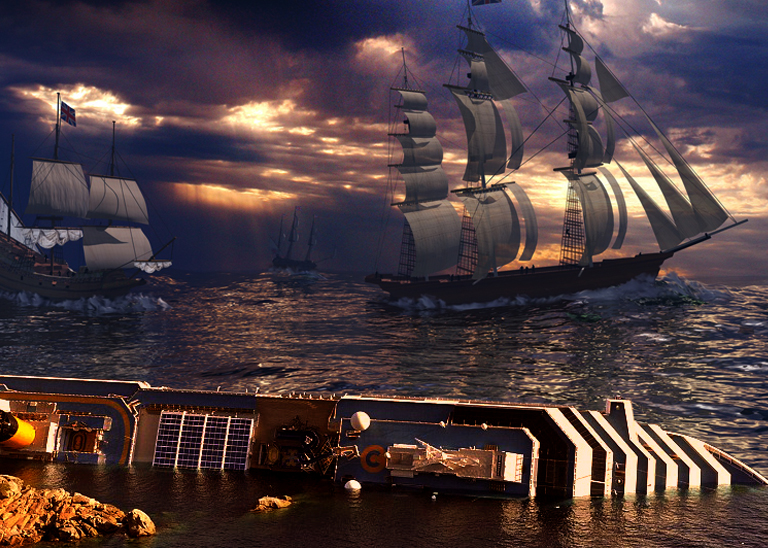
4. You can see this on the Concordia. In the image at the top of this post, lifeboats are clearly seen stranded high and dry on the side of the ship.
A New Day

Freezing rain on top of packed snow in my little neighborhood. The temperature is predicted to stay above freezing and move into the forties tomorrow, so this will all be melting soon.
Of course, the local media is in high alert, WHOOP! WHOOP! WHOOP! Danger Will Robinson! The airport is closed, and I swear people are being terrorized by the media coverage. Last night, the gossip mongers at KIRO7 were riding up and down the I-5 with their little cameras pointing through the windshield, preempting programming to breathlessly “report” the driving conditions. Mind you, this is after the State Patrol asked everyone who did not NEED to travel, to STAY OFF THE ROADS.
It would be a lot more useful if anyone in this club of dimwitted “journalists” (all local media is equally guilty) would actually feature a scientist to seriously discuss the behavior of snow at different temperatures, maybe an engineer to talk a little about the traction characteristics of vehicles in various kinds of snow, or even to invite a tire expert on to explain what difference an extra $50 per tire can make in grip and handling.
But no. The “coverage” last night was Billy Bob with a jug in his 4×4, crowing, “Lookee! Lookee! Duh, Gawdang! Sho’ is slipp’ry!” It is a tale told by an idiot, full of sound and fury, signifying nothing. 1