One of the more brain-dead ideas builders have had is the use of 2×4 lumber in the expansion joints of concrete driveways. It is only a matter of time before it begins to rot, which attracts ants and termites, who find the smorgasbord you call a “house” very quickly after they’ve gotten their fill of your driveway.
The wood in our driveway was in an advanced state of rot when we bought the house last year, and I knew I would have to do something about it soon. I was determined to find a no-maintenance (or at least low-maintenance) solution, and I found a nifty product called SlabGasket, which is just what the doctor ordered!
 There is a free sample pack available on Amazon, so you can be certain of the size and color you need before you order. It comes shipped from Texas (Yes! An actual product made in the U.S.!) in 50′ rolls, and additional pieces can be ordered cut to length. I phoned my order in on Wednesday, and FedEx delivered it on Saturday.
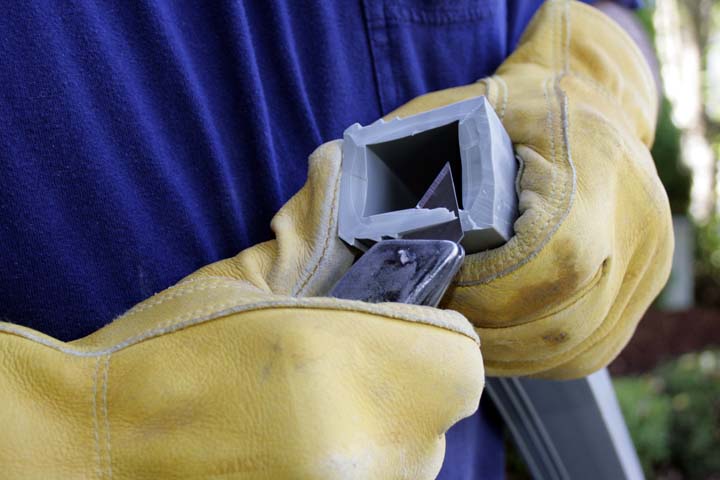 It is rugged and heavy extruded vinyl, yet cuts easily with a utility knife. The only other tool you need is a rubber mallet.
I ripped out all of the wood in our driveway and the walkway leading to the front door, power washed the debris out of the gaps, and filled the gaps in with pea gravel to a 2″ depth. The gravel is important, because it provides a foundation for the SlabGasket, which could otherwise be driven down as deep as the gap is – usually 4″ in a typical driveway. As our entire driveway seems to be hiding a network of tree roots, I also sprinkled copper sulfate into the gaps to discourage further root growth.
The installation was easy, I simply pressed it into place by aligning it with the gap and stepping on it, then I followed up by hammering it all level with a mallet and a short piece of 2×4 as a caul.
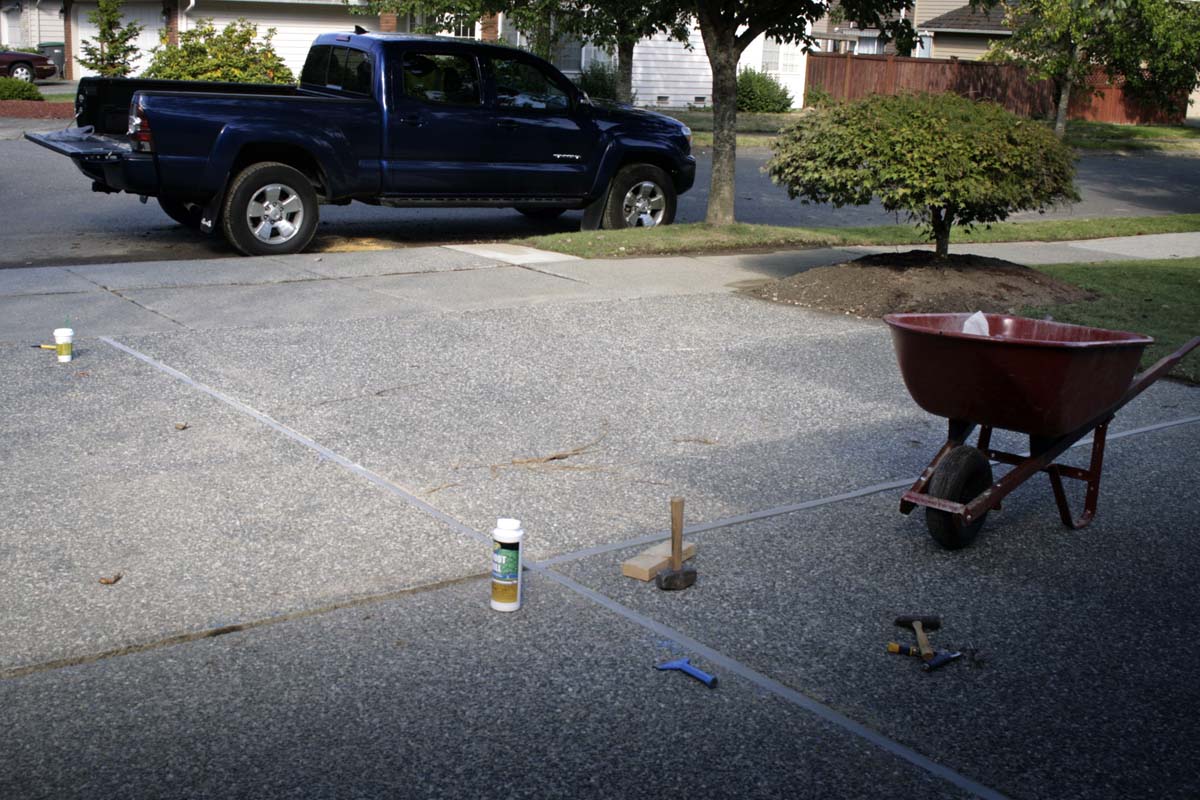 It’s not cheap. 65′ of 1-5/8″ wide gray, and 30′ of 3/4″ wide gray set us back $450, but it is a no-maintenance answer to an ignorant building practice that needed to be corrected.
And it looks so much better than the rotted 2x4s that had weeds and grass growing out of them, along with an ant nest, termites, beetles and potato bugs that will now be looking elsewhere in the neighborhood for a place to call home.