Overcoming thread size mismatches.
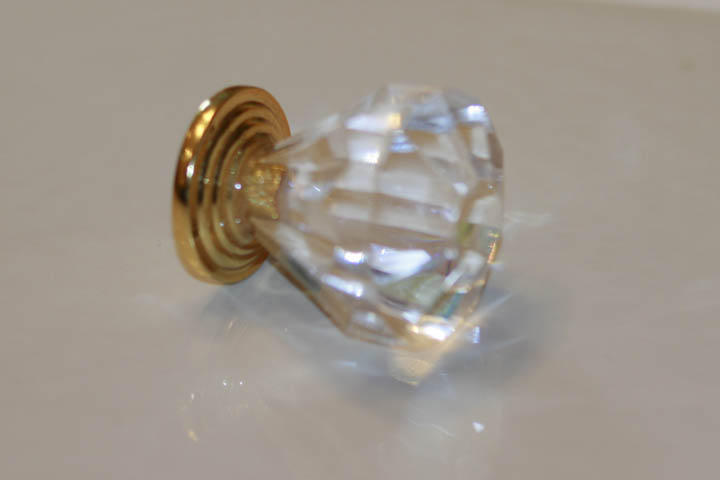 So. I want to hang one of those wire racks in the shower that holds soap and a few bottles of shampoo. I get the brilliant brain fart that this faux crystal knob would work well, and look pretty cool, too.
So I measured out the best location, approved it with the boss, drilled through the ceramic tile and installed a molly. Then I trimmed the head off the molly screw and tried to thread it into the knob.
That’s when I discovered the screw that came with the molly is smaller than the screw that comes with the knob.
Here’s how you can get yourself out of a jam when your screw is too small.
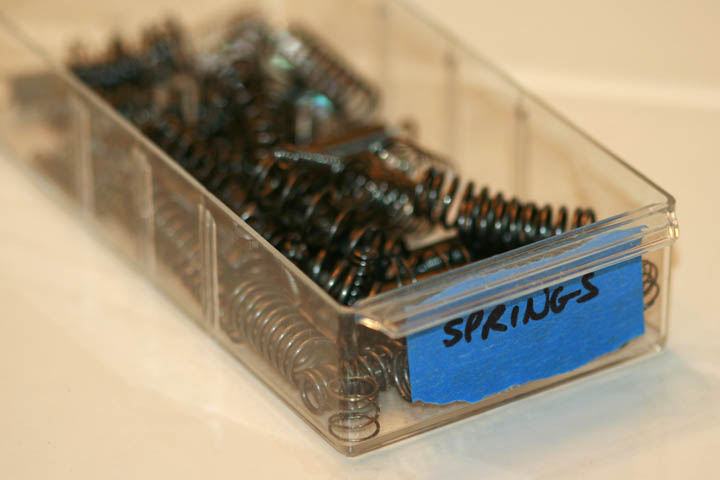 Whenever I get rid of electronics, I do a complete destructive teardown, and I save a number of parts – springs and very small screws in particular.
This has, as you might imagine, inspired a fair amount of mockery – apparently it is “anal” to repurpose parts, and to be able to find them when you need them. But nevermind. He who laughs last, laughs best. (Or in my case, “He who laughs last, thinks slowest.”)
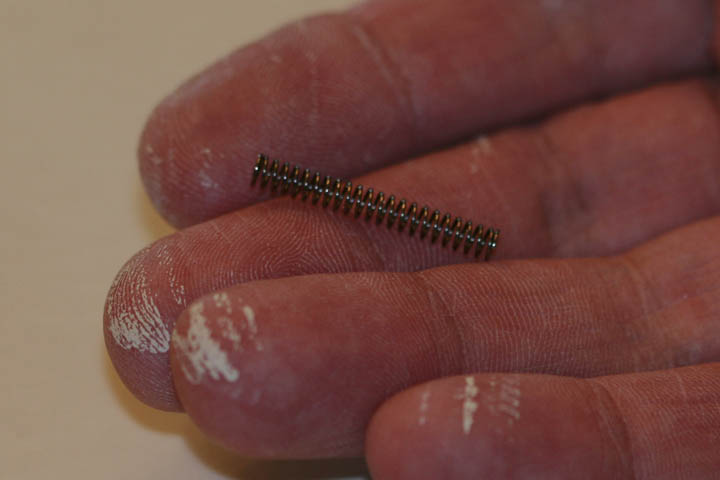 I selected a spring that was slightly smaller than the screw, and threaded it on to the end of the screw that was destined for the knob.
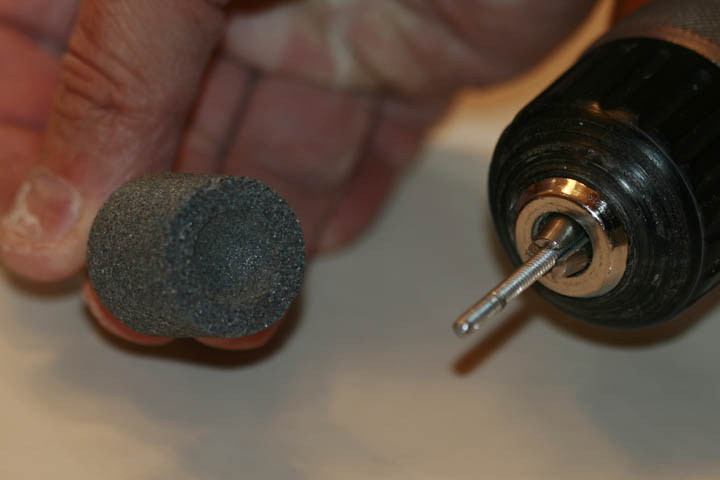 Before the spring was “screwed” onto the threads, I deburred the end of the screw that would receive the spring in order to smooth the transition.
The fastest way to get this done is to chuck the screw into a drill, and at top speed, hold it against a grinding stone. When it’s smooth and rounded, you’re ready to screw.
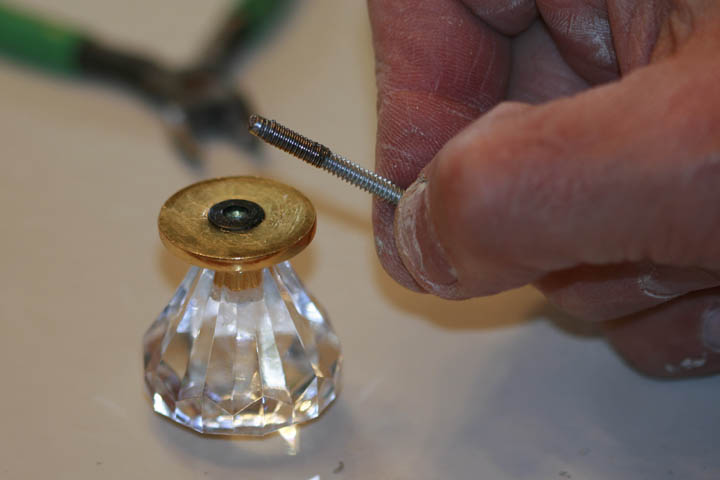 Here, you see the spring threaded onto the screw, and trimmed to length.
Woo Hooo! It fits as tight as a nun’s… ummm… Well, ahh… let’s just say… it’s a perfect fit.
Here you see the insertion, and the final application. Imagine. Without this blog post, you’d probably never figure out how to spend over an hour putting a knob on a wall.
2 Responses to Legerdemain and PFM – 2